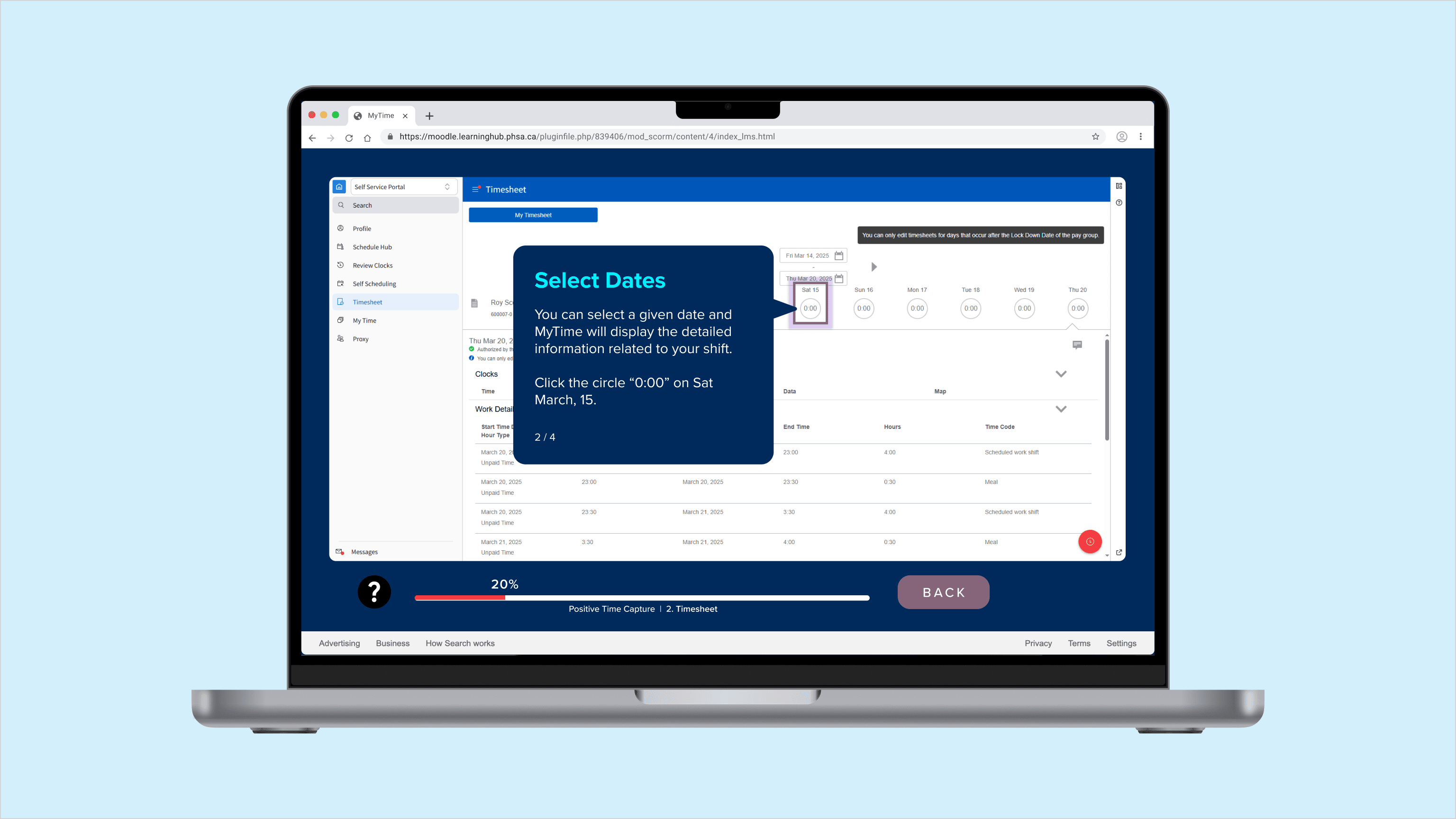
Overview
VCH is a healthcare organization supporting thousands of employees across diverse roles and digital skill levels
As a new workforce management platform was rolled out to frontline employees and people managers, many struggled to navigate its complexity. I designed an end-to-end onboarding and learning experience to support confident system adoption across roles.
Problem
Complex platform for a large user base of varied digital literacy
Unionized and excluded employees followed different timekeeping processes, and many were not tech-savvy, feeling overwhelmed by a system that directly affected scheduling, time-off, and pay. With limited time, managers required deeper system knowledge, yet existing resources were fragmented and difficult to navigate. Any errors could directly impact payroll and workforce operations.
To better understand where users struggled, I analyzed key workflows across employee types and roles.
Key Insights
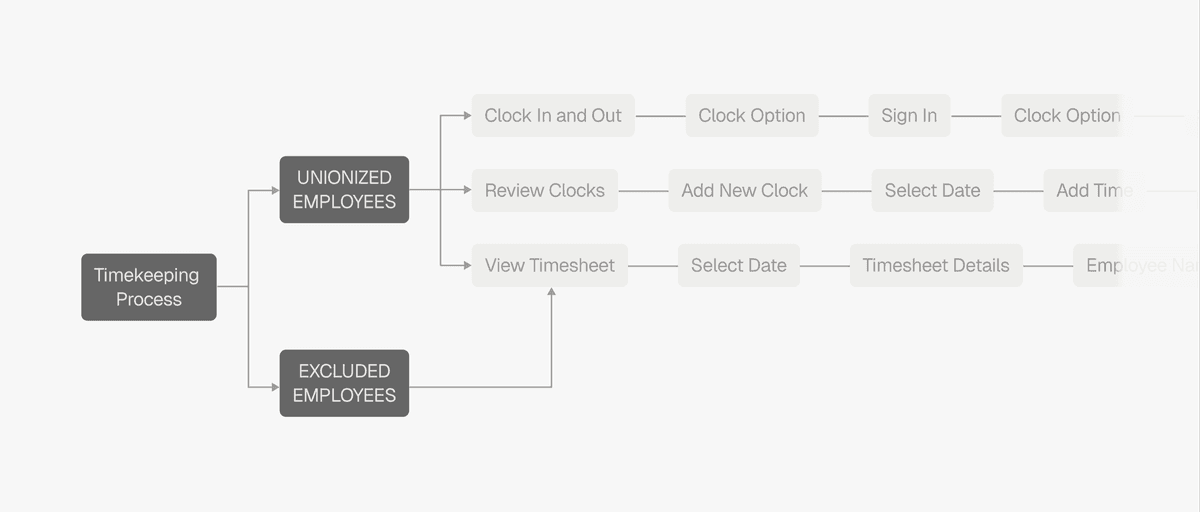
Different employee classifications created divergent task flows
Mapping employee journeys revealed that unionized and excluded employees used the same interface but followed different timekeeping workflows. While excluded employees could bypass certain steps, unionized employees were required to complete mandatory procedures, creating friction and confusion within a shared system.
Key Insights
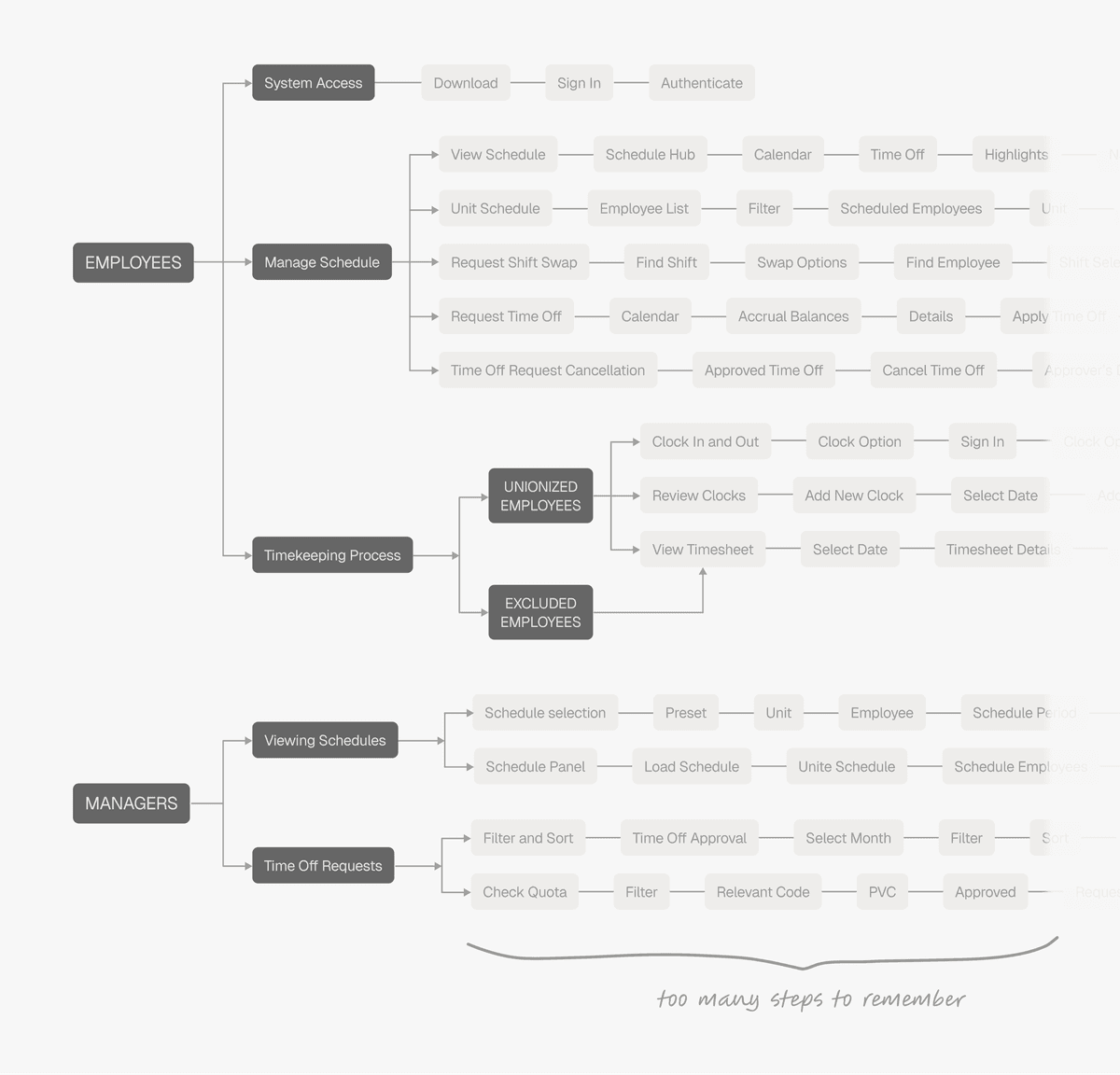
Critical workflows required too many steps to recall reliably
While employees and managers could now complete many tasks digitally, most workflows involved too many steps to recall reliably. Small variations between similar tasks increased cognitive load and introduced risk, particularly for high-impact actions such as payroll and scheduling.
Solution
Role-based onboarding and learning experiences
I designed role-based onboarding journeys broken down into short, focused units, allowing each user group to learn key tasks through scenarios and simulations. This structure reduced cognitive load by guiding users through only the workflows relevant to their role, while reinforcing critical differences in procedures.
Design Decisions
Role-based onboarding and learning experiences
By mirroring real-world use, users are able to build accurate mental models of the system, gain confidence in their actions, and understand the purpose behind each task rather than following arbitrary steps.
Immersing users through a simulation
Users are immersed directly within the platform, with contextual hotspots guiding attention to the correct actions at each step.
Step-by-step guidance to support varied digital literacy
Each step within the simulation was explicitly described to support users with varied levels of digital literacy and reduce reliance on prior system knowledge.
Breaking down complex workflows
I applied progressive disclosure by breaking complex workflows into short, focused units, allowing users to learn tasks incrementally and choose where to start or return as needed.
Assessing users' understanding of the platform
Using instructional design principles, I introduced self-assessments that allowed users to validate their understanding, reinforce learning, and build a sense of ownership before returning to the live system.
Design System
Design system documentation for scalable handoff
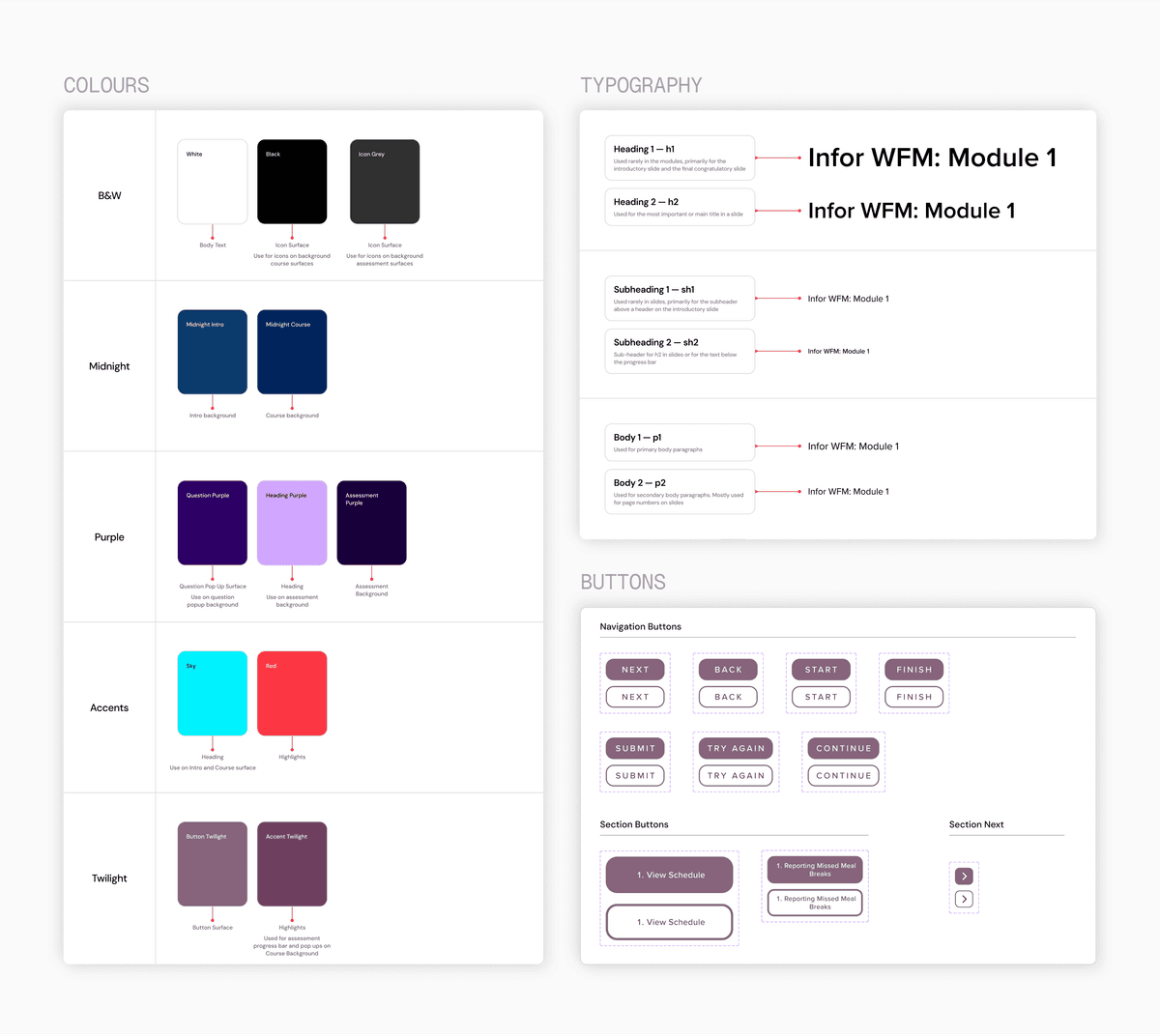
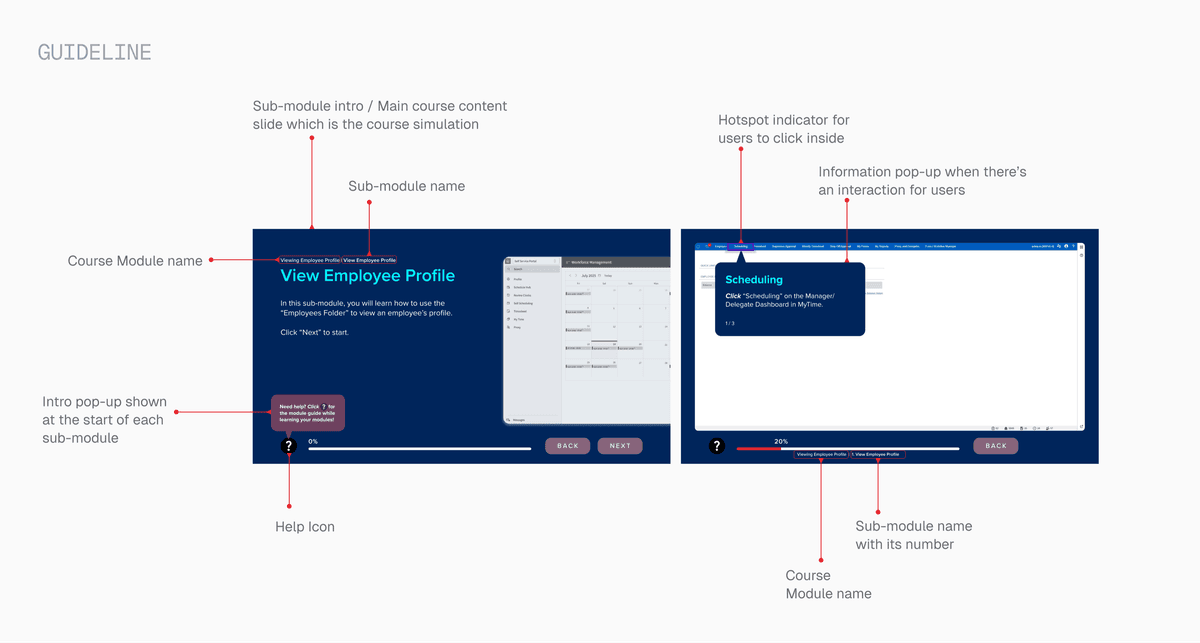
The documentation defined foundations for colour, typography, and components, along with clear guidelines for structuring onboarding journeys and individual screens to ensure consistency during handoff.
Reflection
What I Learned
The simplest designs can be the best solution
Designing for users with varied digital literacy reinforced that simple experiences are the result of careful decisions. Reducing cognitive load meant understanding complex workflows and intentionally deciding what to guide, simplify, or remove.
Design is not as straightforward and simple as it can seem
Working within technical limitations and aligning with multiple stakeholders showed me that design is rarely linear. Iteration was often driven by constraints, and learning to adapt while still advocating for users was a key takeaway.